How Russian-Speaking Buyers Navigate Prime London Property Purchases
By Griskin
Published 7 February 2026
Reading time: 7 minutes
Russian-speaking buyers have purchased property in London continuously since the early 2000s. The composition of that buyer group, and the way they buy, has changed materially since 2022. Anyone advising in this space who has not adjusted is giving outdated advice.
This piece sets out, plainly, who today's Russian-speaking buyer in Prime London actually is, what has changed structurally since the imposition of UK sanctions on Russia in February 2022, and the specific points at which buyers from this community are most exposed to poor advice during a London purchase.
Who buys Prime London property as a Russian-speaking buyer in 2026?
The phrase "Russian-speaking buyer" is broader than most market commentary acknowledges. It includes Russian, Ukrainian, Belarusian, Kazakh, Uzbek, Latvian, and Israeli citizens, often with multiple jurisdictions of residence and tax exposure. The unifying factor is language and cultural reference, not nationality.
In practice, three buyer profiles dominate today.
The first is the long-resident family. These are clients who arrived in the UK between 2005 and 2015, hold British citizenship or indefinite leave to remain, and are now buying for their adult children, often around UCL, LSE, Imperial, or for Russell Group placements. The decision is family-driven, not investment-driven, and the holding period is multi-generational.
The second is the relocated Russian-speaking professional. Senior figures in technology, finance, and energy who have moved their domicile out of Russia post-2022, frequently to Dubai, Cyprus, or Israel, and are buying in London either as a secondary base or as a hedge. They are typically on Tier 1 Innovator, Skilled Worker, or Investor-equivalent routes through other jurisdictions. They are not on the UK Investor Visa, which was closed in February 2022.
The third is the next-generation buyer. Children of buyers from the 2005 to 2015 cohort, now in their late twenties to early forties, often UK-educated, professionally established, and purchasing on their own account. Frequently dual-nationals. Their purchasing behaviour resembles that of any HNW British buyer with one important difference: family capital structures often span jurisdictions in ways that materially affect how the purchase should be structured.
What today's Russian-speaking buyer in Prime London is not, in the vast majority of cases, is the stereotype that dominates international press coverage. The sanctioned oligarch class represents a tiny fraction of historical Russian capital in London property, and that capital has either been frozen, divested, or restructured. According to UK Land Registry data referenced in industry reporting, only around 1,127 properties were owned via companies with a Russian correspondence address as of 2022, less than one-twentieth of the equivalent figure for Hong Kong-based ownership structures. The market reality and the public perception are not aligned.
What changed structurally after February 2022
Five things changed materially, and they continue to shape how Russian-speaking buyers transact in London today.
UK sanctions enforcement intensified, with the Office of Financial Sanctions Implementation taking a far more active role and the Register of Overseas Entities introduced in 2022 requiring beneficial owner disclosure for any UK property held by an overseas entity. The Tier 1 Investor Visa route was closed. The non-domiciled tax regime was abolished, fundamentally reshaping the long-term tax calculus for any internationally mobile buyer. SDLT surcharges increased, with the non-resident surcharge at 2 percent and the additional dwelling surcharge rising to 5 percent in October 2024. AML and KYC scrutiny on Russian-linked funds, regardless of whether the individual is sanctioned, became the default at major UK banks, conveyancing firms, and lenders.
The combined effect is that a Russian-speaking buyer in 2026 cannot purchase Prime London property the way a Russian-speaking buyer purchased in 2015. The transaction takes longer. Source-of-funds documentation is materially more demanding. Bank account opening for non-residents, particularly with Russian-linked income history, can take three to six months and is not guaranteed. Advisors who have not lived through this shift, or who try to apply pre-2022 templates, generate avoidable failure points.
The three points at which Russian-speaking buyers are most exposed
Most poor outcomes I see in this market trace to three specific points in the transaction.
Source of funds documentation. UK conveyancers and banks now require granular, multi-year evidence of fund origin for any Russian-linked client. The standard request is bank statements going back five to seven years, evidence of underlying income or asset sale, and documentation of any movement of funds across jurisdictions. Buyers who have moved capital through multiple structures, even entirely legitimately, often arrive at exchange unprepared for the depth of evidence required. The transaction stalls. The seller loses confidence. The buyer is then negotiating from a position of weakness, or loses the property.
The fix is preparation, not evasion. Source-of-funds packs should be assembled before an offer is made, not after. A buyer's advisor who does not initiate this conversation in the first meeting is not advising properly.
Choice of legal counsel. Not all UK property solicitors have meaningful experience with internationally complex AML files. A solicitor who handles three Russian-linked clients a year will not run the file as efficiently as one who handles thirty. The cost difference is marginal. The outcome difference is large. Russian-speaking buyers frequently inherit a solicitor by recommendation from the estate agent, which is the wrong direction of recommendation entirely. The agent works for the seller, and any solicitor recommended through that channel may be optimised for transaction speed rather than buyer protection.
Ownership structuring. Whether to hold the property in personal name, through a UK or offshore corporate structure, through a trust, or through a combination, is a decision that should be made before the offer, not after. The wrong structure can trigger ATED (Annual Tax on Enveloped Dwellings) liability, fail UK inheritance tax planning entirely, or expose the buyer to higher SDLT than necessary. None of these decisions can be cleanly reversed once the transaction has completed. They sit at the intersection of UK tax law and the buyer's home jurisdiction structures, which is why this conversation belongs with a UK tax advisor and a cross-border structuring lawyer, not with the estate agent and not with the buyer's advisor alone.
Where Russian-speaking buyers are actually buying
Geography has shifted. The traditional clustering in Knightsbridge, Belgravia, and Mayfair persists for the high end, but the active buying patterns I see across our client base in 2026 are broader.
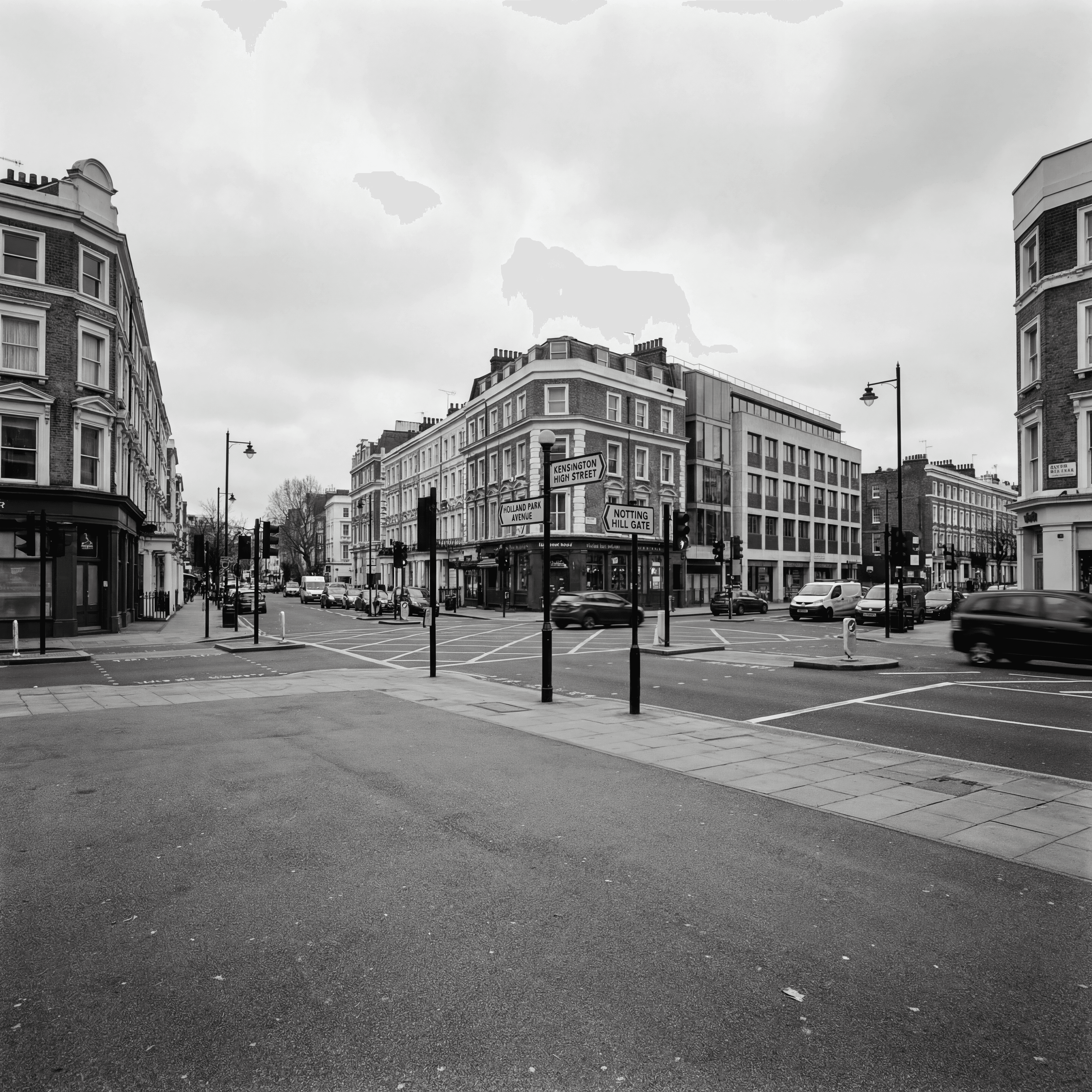
Within Prime Central London, Marylebone, Kensington, and Notting Hill have absorbed buyers who previously would have defaulted to Knightsbridge. The reasoning is partly aesthetic, partly schools, partly a quieter profile. South Kensington and the area around Imperial College draws a specific subset of buyers focused on children's university placements.
Outside PCL, the prime Surrey and Berkshire estates, Wentworth, St George's Hill, Sunningdale, Virginia Water, remain a consistent draw for families seeking privacy, security, and proximity to Heathrow. These are typically larger holdings with longer intended residence periods, and the buyer profile skews toward the long-resident family cohort.
The growth area, less commonly discussed, is the £3 million to £8 million bracket in established North London family neighbourhoods, Hampstead, Highgate, St John's Wood, Primrose Hill. This reflects the next-generation buyer cohort buying for their own families rather than as a secondary residence.
What independent buyer-side advice changes for this market
The structural argument for buyer-side representation in Prime London applies to any international buyer. For Russian-speaking buyers specifically, three additional factors raise the value of independent advice.
Language and cultural fluency in the advisor matters. Substantive negotiation, transactional decisions under time pressure, and difficult conversations about structuring all benefit from being conducted in the buyer's first language with full cultural context. This is not a stylistic preference. It is a precision question. Errors of nuance in cross-cultural transactions are expensive.
Independent advisors are not exposed to the conflicts that affect estate-agent-aligned services. A buyer who is recommended a solicitor, a tax advisor, and a private bank by the estate agent who is selling them the property has no independent voice in the room. The introductions may be legitimate. They are not, by structure, in the buyer's interest.
Discretion is structural rather than performative. Russian-speaking buyers in 2026 have legitimate reasons for wanting transactions handled with operational confidentiality, ranging from ordinary privacy preferences to genuine security concerns. An independent buyer's advisor working with a small client roster can provide this in a way that a high-volume agency cannot.
The bottom line
Prime London remains accessible to Russian-speaking buyers in 2026. The transaction is more administratively demanding than it was a decade ago, the source-of-funds process is more rigorous, and the structural decisions are less forgiving of error. With proper preparation and independent representation, none of these factors should prevent a well-organised buyer from completing a transaction efficiently.
Without that preparation, transactions that should complete in twelve to sixteen weeks routinely take six to nine months, properties are lost, and avoidable cost and tax exposure is introduced.
If you are considering a Prime or Super-Prime London purchase and would benefit from a confidential conversation about your specific position, I can be reached at info@griskin.co.uk or +44 7427 533 006. Initial conversations are without obligation, in English or Russian.
By Griskin
Published 7 February 2026
Reading time: 7 minutes
Russian-speaking buyers have purchased property in London continuously since the early 2000s. The composition of that buyer group, and the way they buy, has changed materially since 2022. Anyone advising in this space who has not adjusted is giving outdated advice.
This piece sets out, plainly, who today's Russian-speaking buyer in Prime London actually is, what has changed structurally since the imposition of UK sanctions on Russia in February 2022, and the specific points at which buyers from this community are most exposed to poor advice during a London purchase.
Who buys Prime London property as a Russian-speaking buyer in 2026?
The phrase "Russian-speaking buyer" is broader than most market commentary acknowledges. It includes Russian, Ukrainian, Belarusian, Kazakh, Uzbek, Latvian, and Israeli citizens, often with multiple jurisdictions of residence and tax exposure. The unifying factor is language and cultural reference, not nationality.
In practice, three buyer profiles dominate today.
The first is the long-resident family. These are clients who arrived in the UK between 2005 and 2015, hold British citizenship or indefinite leave to remain, and are now buying for their adult children, often around UCL, LSE, Imperial, or for Russell Group placements. The decision is family-driven, not investment-driven, and the holding period is multi-generational.
The second is the relocated Russian-speaking professional. Senior figures in technology, finance, and energy who have moved their domicile out of Russia post-2022, frequently to Dubai, Cyprus, or Israel, and are buying in London either as a secondary base or as a hedge. They are typically on Tier 1 Innovator, Skilled Worker, or Investor-equivalent routes through other jurisdictions. They are not on the UK Investor Visa, which was closed in February 2022.
The third is the next-generation buyer. Children of buyers from the 2005 to 2015 cohort, now in their late twenties to early forties, often UK-educated, professionally established, and purchasing on their own account. Frequently dual-nationals. Their purchasing behaviour resembles that of any HNW British buyer with one important difference: family capital structures often span jurisdictions in ways that materially affect how the purchase should be structured.
What today's Russian-speaking buyer in Prime London is not, in the vast majority of cases, is the stereotype that dominates international press coverage. The sanctioned oligarch class represents a tiny fraction of historical Russian capital in London property, and that capital has either been frozen, divested, or restructured. According to UK Land Registry data referenced in industry reporting, only around 1,127 properties were owned via companies with a Russian correspondence address as of 2022, less than one-twentieth of the equivalent figure for Hong Kong-based ownership structures. The market reality and the public perception are not aligned.
What changed structurally after February 2022
Five things changed materially, and they continue to shape how Russian-speaking buyers transact in London today.
UK sanctions enforcement intensified, with the Office of Financial Sanctions Implementation taking a far more active role and the Register of Overseas Entities introduced in 2022 requiring beneficial owner disclosure for any UK property held by an overseas entity. The Tier 1 Investor Visa route was closed. The non-domiciled tax regime was abolished, fundamentally reshaping the long-term tax calculus for any internationally mobile buyer. SDLT surcharges increased, with the non-resident surcharge at 2 percent and the additional dwelling surcharge rising to 5 percent in October 2024. AML and KYC scrutiny on Russian-linked funds, regardless of whether the individual is sanctioned, became the default at major UK banks, conveyancing firms, and lenders.
The combined effect is that a Russian-speaking buyer in 2026 cannot purchase Prime London property the way a Russian-speaking buyer purchased in 2015. The transaction takes longer. Source-of-funds documentation is materially more demanding. Bank account opening for non-residents, particularly with Russian-linked income history, can take three to six months and is not guaranteed. Advisors who have not lived through this shift, or who try to apply pre-2022 templates, generate avoidable failure points.
The three points at which Russian-speaking buyers are most exposed
Most poor outcomes I see in this market trace to three specific points in the transaction.
Source of funds documentation. UK conveyancers and banks now require granular, multi-year evidence of fund origin for any Russian-linked client. The standard request is bank statements going back five to seven years, evidence of underlying income or asset sale, and documentation of any movement of funds across jurisdictions. Buyers who have moved capital through multiple structures, even entirely legitimately, often arrive at exchange unprepared for the depth of evidence required. The transaction stalls. The seller loses confidence. The buyer is then negotiating from a position of weakness, or loses the property.
The fix is preparation, not evasion. Source-of-funds packs should be assembled before an offer is made, not after. A buyer's advisor who does not initiate this conversation in the first meeting is not advising properly.
Choice of legal counsel. Not all UK property solicitors have meaningful experience with internationally complex AML files. A solicitor who handles three Russian-linked clients a year will not run the file as efficiently as one who handles thirty. The cost difference is marginal. The outcome difference is large. Russian-speaking buyers frequently inherit a solicitor by recommendation from the estate agent, which is the wrong direction of recommendation entirely. The agent works for the seller, and any solicitor recommended through that channel may be optimised for transaction speed rather than buyer protection.
Ownership structuring. Whether to hold the property in personal name, through a UK or offshore corporate structure, through a trust, or through a combination, is a decision that should be made before the offer, not after. The wrong structure can trigger ATED (Annual Tax on Enveloped Dwellings) liability, fail UK inheritance tax planning entirely, or expose the buyer to higher SDLT than necessary. None of these decisions can be cleanly reversed once the transaction has completed. They sit at the intersection of UK tax law and the buyer's home jurisdiction structures, which is why this conversation belongs with a UK tax advisor and a cross-border structuring lawyer, not with the estate agent and not with the buyer's advisor alone.
Where Russian-speaking buyers are actually buying
Geography has shifted. The traditional clustering in Knightsbridge, Belgravia, and Mayfair persists for the high end, but the active buying patterns I see across our client base in 2026 are broader.
Within Prime Central London, Marylebone, Kensington, and Notting Hill have absorbed buyers who previously would have defaulted to Knightsbridge. The reasoning is partly aesthetic, partly schools, partly a quieter profile. South Kensington and the area around Imperial College draws a specific subset of buyers focused on children's university placements.
Outside PCL, the prime Surrey and Berkshire estates, Wentworth, St George's Hill, Sunningdale, Virginia Water, remain a consistent draw for families seeking privacy, security, and proximity to Heathrow. These are typically larger holdings with longer intended residence periods, and the buyer profile skews toward the long-resident family cohort.
The growth area, less commonly discussed, is the £3 million to £8 million bracket in established North London family neighbourhoods, Hampstead, Highgate, St John's Wood, Primrose Hill. This reflects the next-generation buyer cohort buying for their own families rather than as a secondary residence.
What independent buyer-side advice changes for this market
The structural argument for buyer-side representation in Prime London applies to any international buyer. For Russian-speaking buyers specifically, three additional factors raise the value of independent advice.
Language and cultural fluency in the advisor matters. Substantive negotiation, transactional decisions under time pressure, and difficult conversations about structuring all benefit from being conducted in the buyer's first language with full cultural context. This is not a stylistic preference. It is a precision question. Errors of nuance in cross-cultural transactions are expensive.
Independent advisors are not exposed to the conflicts that affect estate-agent-aligned services. A buyer who is recommended a solicitor, a tax advisor, and a private bank by the estate agent who is selling them the property has no independent voice in the room. The introductions may be legitimate. They are not, by structure, in the buyer's interest.
Discretion is structural rather than performative. Russian-speaking buyers in 2026 have legitimate reasons for wanting transactions handled with operational confidentiality, ranging from ordinary privacy preferences to genuine security concerns. An independent buyer's advisor working with a small client roster can provide this in a way that a high-volume agency cannot.
The bottom line
Prime London remains accessible to Russian-speaking buyers in 2026. The transaction is more administratively demanding than it was a decade ago, the source-of-funds process is more rigorous, and the structural decisions are less forgiving of error. With proper preparation and independent representation, none of these factors should prevent a well-organised buyer from completing a transaction efficiently.
Without that preparation, transactions that should complete in twelve to sixteen weeks routinely take six to nine months, properties are lost, and avoidable cost and tax exposure is introduced.
If you are considering a Prime or Super-Prime London purchase and would benefit from a confidential conversation about your specific position, I can be reached at info@griskin.co.uk or +44 7427 533 006. Initial conversations are without obligation, in English or Russian.
Russian-speaking buyer advisory • Prime London property structuring • Source-of-funds preparation • Cross-border AML compliance • Multi-jurisdictional family capital • Surrey prime estates • Confidential property advisory